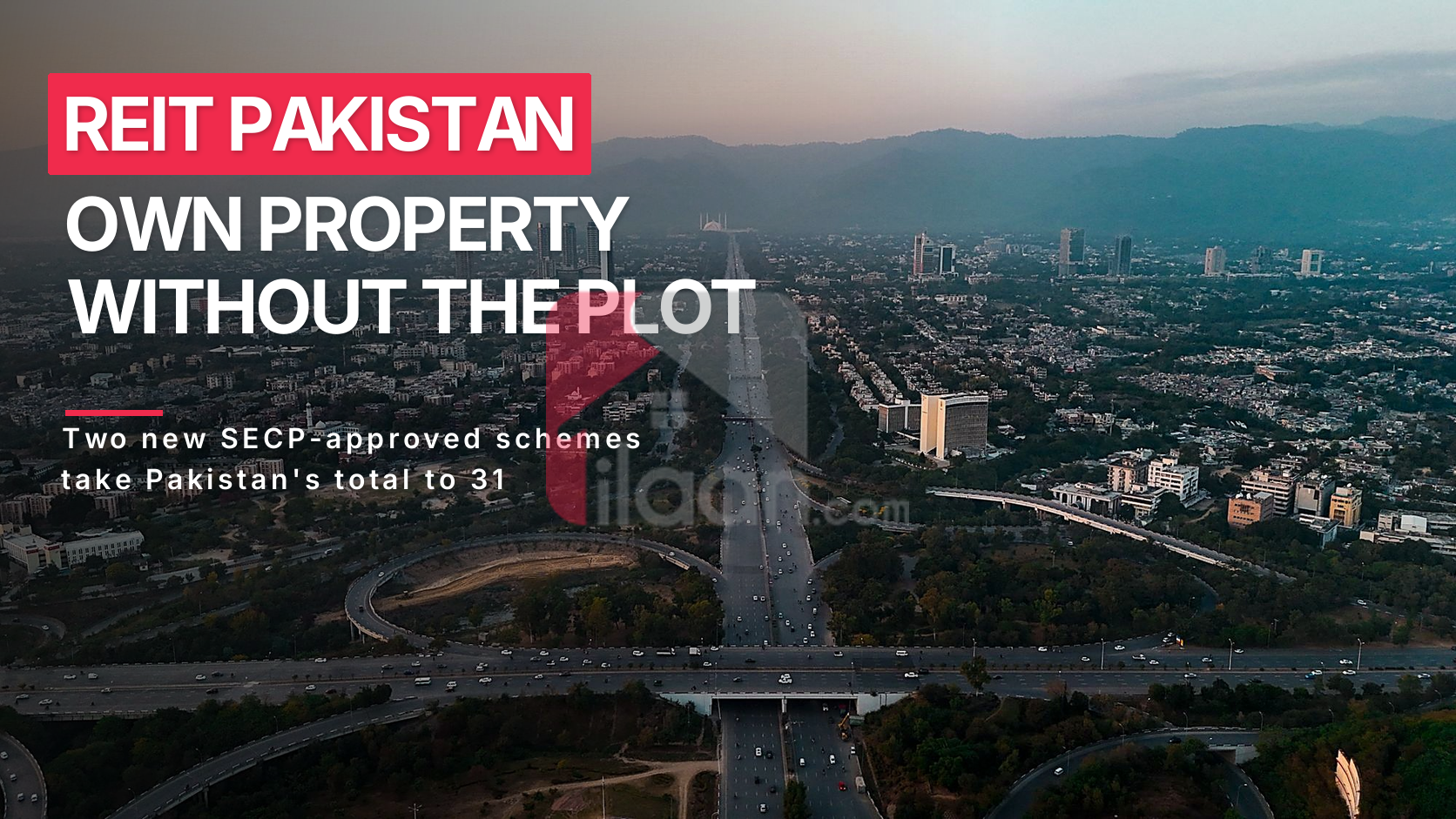
For most Pakistanis, property investment has meant saving for years to buy a whole plot or house. On 23 November 2026, the Securities and Exchange Commission of Pakistan (SECP) gave savers another route, registering two new Real Estate Investment Trust (REIT) schemes and taking the country's total to 31. A REIT lets you own a small unit in a pool of property, and listed REITs trade on the Pakistan Stock Exchange like ordinary shares.
What SECP approved on 23 November
The two schemes are different, and the difference matters. ATMT Dual REIT Series I is a hybrid scheme in Islamabad, combining development with rental income, so it can both build and earn rent. Imperium Tower REIT Scheme is a rental scheme investing in commercial real estate in Lahore through a Special Purpose Vehicle, a separate company holding the property.
The sector now holds 31 schemes, with total assets of Rs275.85 billion on 30 September 2026, 43 licensed management companies, seven listed and 21 Shariah-compliant. SECP Chairman Dr Kabir Ahmed Sidhu called REITs an organised way to invest in real estate. Three more schemes were registered in January 2026, and SECP has proposed changes to the REIT Regulations 2022.
What the announcements do not say matters too. They name no management company, no scheme size, no properties, no expected returns, no minimum investment, and no offer date. Nor is it stated whether either scheme will list. Until the offering documents appear, treat the two names as registered schemes, not as investments you can buy.
What a REIT is, in plain words
A REIT is a trust that owns property which earns money, usually rent. Instead of buying a building yourself, you buy units in the trust. A management company runs it, a trustee holds the assets, and SECP regulates the sector under the REIT Regulations 2022.
The regulations define four types: rental, living off rent from property already owned; developmental, building and selling; hybrid, doing both, which is what ATMT Dual is; and investment-based, holding other property assets. Your return comes two ways: dividends, and the price of your units moving up or down.
The best-known example is Dolmen City REIT, Pakistan's first listed rental REIT. It holds Dolmen Mall Clifton and the Harbour Front office tower in Karachi, is Shariah-compliant, and was worth about Rs88 billion. In FY2026 it earned PKR 6.45 billion in rent, held occupancy near 99 percent, and paid PKR 2.58 per unit in dividends, as reported in October 2026. That is a mature rental REIT, not what a new scheme will pay.
Selling your property? List it on ilaan.com and deal direct with the buyer. No agent in the middle, zero commission on the deal. Your property, your price, your buyer.
How an ordinary Pakistani can invest
There are three routes, and only the first is open to everyone today. Listed units trade on the Pakistan Stock Exchange, bought like a share: open an account with a PSX broker licensed by SECP, get a CDC sub-account, look up the ticker, and place an order. Seven REITs trade on PSX: Dolmen City REIT, JS Rental REIT, Globe Residency REIT, TPL REIT Fund I, Image REIT, Signature Residency REIT and Naya Nazimabad Apartment REIT, the newest, listed on 1 October 2026.
Unit prices move every trading day. On 9 October 2026 they ran from Rs7.78 to Rs39.65, and over the previous year one had gained 24 percent while two had lost more than a third. That is the trade-off: quick to sell, never still.
The second route is a public offer, where the offering document sets the price, quantity and rules. The third is private: unlisted schemes first raise money from accredited investors, institutions and high net worth individuals, not the public.
Neither new scheme has announced a public offer or a listing date. There is nothing to buy yet, and anyone offering you units today is getting ahead of the regulator. Watch SECP and PSX announcements, and read the offering document when it appears.
REIT or a plot: which suits you
They are different tools, not rivals. A REIT unit costs tens of rupees; a small plot costs lakhs. Listed units sell on the exchange on a trading day; selling a plot can take months. A REIT pays dividends from rent; a plot pays nothing until you sell it or build and rent it out. Buying units means brokerage, not dealer commission.
What a REIT cannot give you is the property itself: no say over the building, no plot to build on, no roof over your head. Both routes carry risk. Unit prices move daily; property prices move slowly but can sit flat for years. Neither is guaranteed. Many investors will want both: a REIT for income and liquidity, and a house or plot of their own.
Five checks before you invest
First, confirm SECP registration and read the offering document. Second, know who runs it: the management company and the trustee. Third, know what it holds: the real buildings, their occupancy and their tenants, not the brochure pictures. Fourth, check the net asset value per unit, the last dividend, and the unit price against both. Fifth, understand the tax: dividends are taxed at 15 percent for filers and 30 percent for non-filers, and a REIT keeps its own exemption only by paying out at least 90 percent of its income. Check current FBR rules first. This is information, not investment advice; talk to a licensed adviser before putting serious money in.
Frequently asked questions
What is a REIT in Pakistan? A trust that pools money to own property. You hold units, a management company runs it, a trustee holds the assets, and SECP regulates it.
Are REITs in Pakistan regulated? Yes, by SECP under the REIT Regulations 2022, and listed REITs also follow Pakistan Stock Exchange rules.
How much money do I need to start? For listed REITs, one market lot plus brokerage; unit prices on 9 October 2026 ran from Rs7.78 to Rs39.65. The new schemes have announced no minimum yet.
Are REIT returns guaranteed? No. Dividends depend on the rent collected, and the unit price moves with the market. Two listed REITs lost more than a third in the year to October 2026.
What is the difference between a REIT unit and a property file? A file is a claim on a future plot in a society, with no number or location yet. A REIT unit is a share in property that already earns rent, held by a trustee and regulated by SECP.
When can I buy units in the two new REITs? Not yet. No public offer or listing date has been announced. The offering document will carry both.
The market in one line
REITs will not replace buying a house or a plot. They give Pakistanis a second way into property: smaller tickets, listed prices and regular dividends, with market risk attached. To own property directly, browse verified houses and plots on ilaan.com and deal direct with the owner at zero commission. For the REIT route, check back when the two offering documents appear.