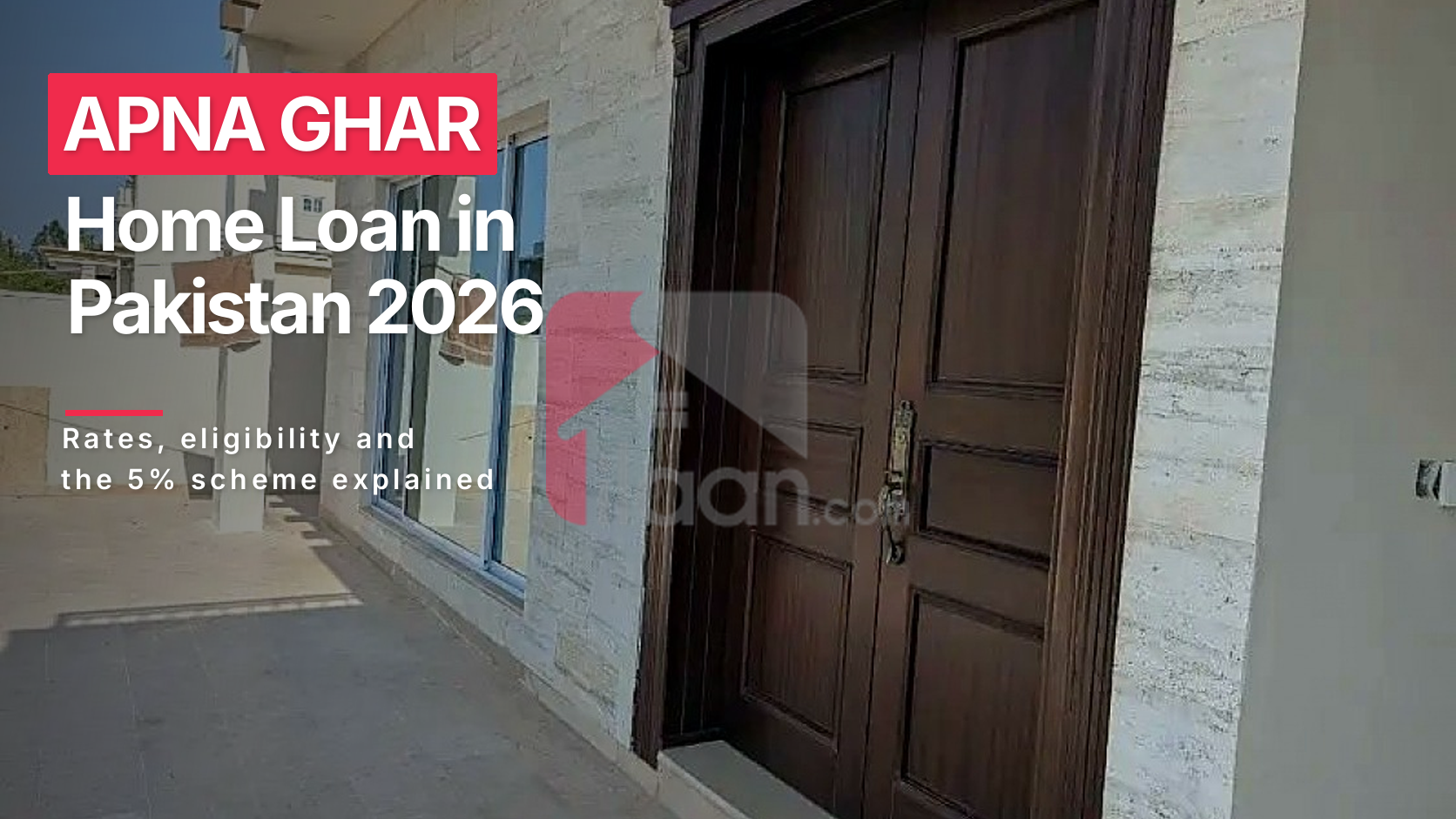
A home loan in Pakistan in November 2026 is two very different products wearing one name. One is a standard bank loan priced off the market, more expensive since the State Bank raised its policy rate to 12 percent on 26 October 2026. The other is the Prime Minister's Apna Ghar scheme, which still offers first time buyers a fixed 5 percent for the first ten years on loans up to Rs 10 million. Which one you can get decides your monthly installment, so start there, not with the property.
The two ways to borrow, and who qualifies
A commercial home loan is priced off KIBOR plus the bank's spread, so your markup moves with the market. With the policy rate at 12 percent, a commercial loan costs far more than the subsidised rate. It covers a wider range of properties and buyers, and the bank sets its own terms, but you pay the market price for the money.
The Apna Ghar scheme, formally the Markup Subsidy and Risk Sharing Scheme for Affordable Housing Finance, is the federal government's subsidised route, launched on 30 April 2026 and delivered through participating banks. The end user pays a fixed 5 percent a year for the first ten years, then the rate becomes variable at one year KIBOR plus 3 percent until maturity. The bank finances up to 90 percent of the property value, so your down payment is 10 percent, and the loan can run for up to 20 years.
The scheme is for a first home: you must not already own residential property registered in your name in Pakistan. Overseas Pakistanis holding a NICOP can also apply. You need a regular, provable monthly income, with banks commonly setting a minimum in the Rs 25,000 to Rs 35,000 range, and a clean credit record.
Approvals reached Rs 511 billion by 23 October 2026, against Rs 91 billion disbursed: approval is not money in hand.
What a home loan actually costs each month
The installment is where the two routes separate. At the subsidised 5 percent, a Rs 10 million loan over 20 years costs about Rs 66,000 a month, and a Rs 5 million loan costs about Rs 33,000 a month. The same Rs 10 million over 20 years at 12 percent costs about Rs 110,000 a month. That difference, about Rs 44,000 a month on the same loan, is the value of the subsidy.
Three costs sit on top of the installment. Your 10 percent down payment, plus any token or bayana already paid. The one off charges: processing, valuation, legal work, insurance, and the cost of creating the mortgage or marking a lien. And the transfer taxes and stamp duty, which depend on your filer status and the property valuation. Work out the total before you sign, because the installment is only the largest cost, not the only one. Remember that the 5 percent rate lasts ten years, not twenty: from year eleven your installment follows KIBOR plus 3 percent, so test your budget against a higher rate before you commit.
How to apply, step by step
First, check your eligibility and your budget on the official Apna Ghar portal, apnaghar.gov.pk, or on a participating bank's housing finance page. Use the bank's calculator to see the installment for your loan amount, and test it at a higher rate too.
Second, choose the bank and the product, and get its checklist in writing. Since 9 October 2026, under SBP Regulation HF-7, banks may ask only for the property documents on a fixed list for your property type and stage, and the bank must give you a signed receipt for every paper you hand over. For loans up to Rs 5 million the bank may mark a lien in the land record instead of a full mortgage. On 14 October 2026 the government cut the documents required for the scheme from 25 to 5, and banks have been directed to decide within 15 working days of a complete application.
Third, submit the application with your CNIC or NICOP, income proof and property documents, through the portal or at a branch. The bank verifies your documents and values the property, and for construction it may release the money in stages as work progresses. The bank lends against the lower of the purchase price and its own valuation, not the asking price, so if the valuation comes in low, you fund the gap yourself.
Fourth, plan for the wait. Approvals have outpaced disbursements: Rs 511 billion approved against Rs 91 billion disbursed by 23 October 2026. Agree the payment schedule with the seller in writing, with dates that allow for the bank's release. If you are building, stage construction to the disbursement schedule, not to optimism.
Three mistakes to avoid
Paying before the bank agrees. If the loan is refused or the valuation comes in low, your token or bayana is already committed, and getting it back depends on what you put in writing. Agree the loan first, then pay.
Buying an unverified property. Match the seller to the title, check the society or authority record, confirm possession and outstanding dues, and confirm the property can be mortgaged or lien marked at all. No bank lends against a disputed title.
Ignoring the year eleven reset and the extra costs. The 5 percent rate is ten years of a twenty year loan, so budget for the variable years from the start. Valuation, legal, insurance, mortgage or lien charges, and transfer taxes also add up on top of your down payment, so get them in writing from the bank before you commit.
Frequently asked questions
What is the markup on an Apna Ghar home loan?
Five percent fixed a year for the first ten years, on loans up to Rs 10 million. From year eleven the rate becomes one year KIBOR plus 3 percent until maturity.
How long does a bank take to decide?
Banks have been directed to decide within 15 working days of receiving a complete application. Disbursement can take longer, so agree payment dates with the seller that allow for it.
What documents will the bank ask for my property?
Only the documents on SBP's fixed HF-7 list for your property type and stage, plus your income proof and credit report. The bank must give you a signed receipt for every paper you hand over.
The bottom line
In November 2026 the cheapest home loan in Pakistan is the subsidised one, and the gap is large: about Rs 66,000 a month against about Rs 110,000 for the same Rs 10 million over 20 years. That makes eligibility the first question, not the property. Check the scheme first, get the bank's checklist in writing, match it against the fixed HF-7 list, and test your budget at a higher rate before you sign.
If you are buying, start with a property with clean papers. Browse verified direct owner listings on ilaan.com and deal at zero commission. Overseas or short on time: unlock owner contacts with Prime. When it is your turn to sell, get Gold Verified for a one time PKR 3,000: field verification, title check, 30 photos and video, and managed viewings.
This guide is general information, not financial or legal advice. Rates, scheme terms and bank policies change, so confirm the current markup, eligibility and charges with the bank before you apply.